
会痛的十七岁
山西省洪洞县农商行原董事长郭宏伟被遣返回国_我的网站

一 | 中新网8月26日电 据中央纪委国家监委网站消息,近日,在中央反腐败协调小组国际追逃追赃工作办公室统筹协调下,经山西省监察机关、公安机关与有关国家执法机关密切合作,外逃职务犯罪嫌疑人郭宏伟在境外投案并被遣返回国。

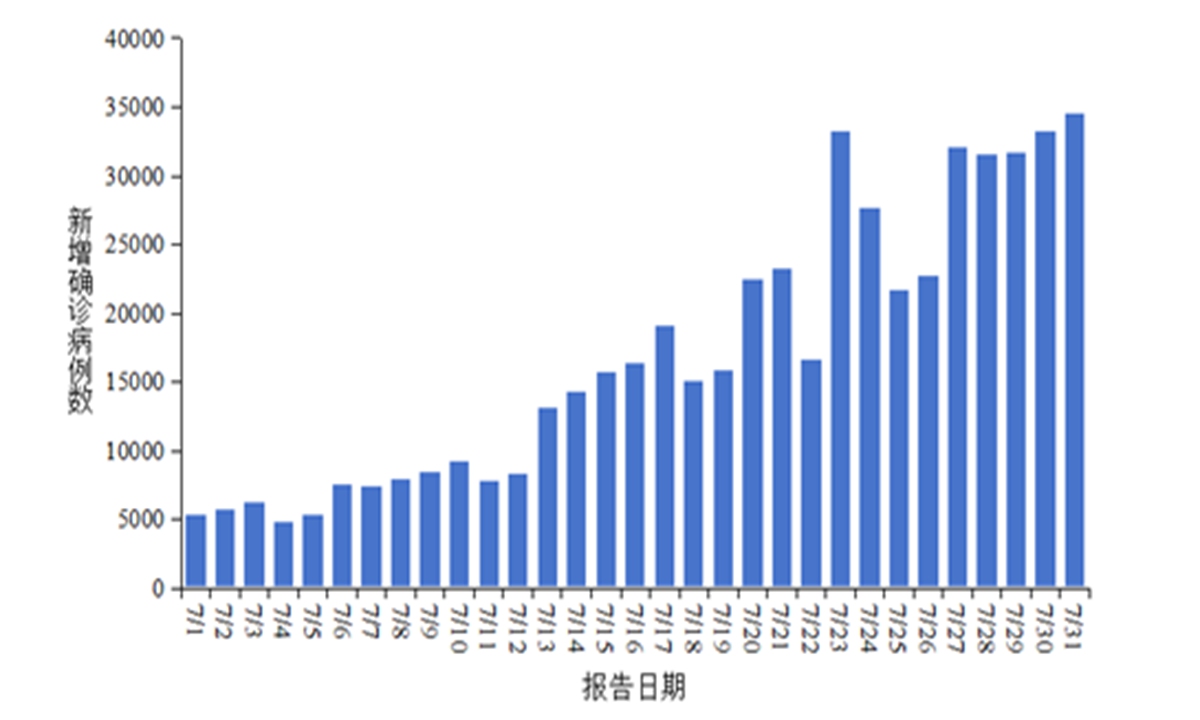
China reported 522,000 newly confirmed COVID-19 cases in July, including 487 severe cases and one related death with cases showing a fluctuating upward trend, China's national disease control authority said.
The current uptick in infections represents another regular cyclical wave, with its severity comparable to surges seen in the past two years. The upward growth curve has slowed markedly, and the country is now on the plateau phase of this epidemic peak, said the Chinese Center for Disease Control and Prevention (Chinese CDC) on Thursday.
All tested infection samples were confirmed to be the Omicron variant, with the NB.1.8.1 strain and its sublineages accounting for the majority of circulating cases, the Chinese CDC said.
A Beijing-based respiratory disease specialist told the Global Times that waning population immunity, continued virus mutations that weaken existing antibody protection, and increased summer travel have contributed to the recent modest rise in infections. However, there is no evidence that the virus has become more pathogenic. Nationwide infections appear to be nearing their peak and case numbers may begin falling in late August.
According to sentinel hospital surveillance data, from June 29-July 5 to July 27-August 2, the proportion of influenza-like illness among all outpatient and emergency visits at China's 1,041 COVID-19 and influenza sentinel hospitals edged up with slight fluctuations, standing at 4.3 percent, 4.4 percent, 4.5 percent, 4.4 percent and 4.5 percent, respectively.
During the same period, the COVID-19 positivity rate among patients with influenza-like illness in outpatient and emergency departments rose for consecutive weeks.
Several factors drove the fluctuating rise in COVID-19 cases in July. Population immunity has waned, as more than six months have passed since the last major wave of infections for most people, while continued SARS-CoV-2 mutations have reduced the protection provided by existing antibodies, Li Tongzeng, a respiratory disease medic from Beijing You An Hospital to the Capital Medical University, told the Global Times on Friday.
These factors, combined with increased travel and population mobility during the summer vacation, contributed to the recent small-scale surge. Based on patterns observed in recent years, COVID-19 infections tend to rise every six to eight months as population immunity declines, said Li.
The expert noted that while the virus continues to mutate, there is no evidence that it has become more pathogenic. Clinical data show that most patients develop only mild symptoms, with very few progressing to pneumonia or requiring hospitalization.
The Chinese CDC noted on Thursday that since COVID-19 was reclassified as a Category B infectious disease under Category B management, it has evolved into a prevalent, recurring respiratory infectious disease in China, with one to two epidemic fluctuations occurring nationwide each year.
Li also noted that residual immunity from previous infections also helps reduce disease severity, with most reinfections presenting as mild upper respiratory symptoms that resolve within about a week. The single COVID-related death reported nationwide in July further indicates that the current fatality rate remains very low.
Judging from historical epidemic patterns and current case growth trajectories, national infection figures may begin to decline in late August. Nationwide case numbers are now nearly at their peak, with declines already observed in some regions, said Li.
The Chinese CDC also said on Thursday that surveillance had not detected any variants posing major public health risks, nor had the current wave caused notable disruptions to the healthcare system.
The public is advised to take appropriate protective measures, including wearing masks when necessary, maintaining good personal hygiene, adopting healthy lifestyles and getting vaccinated as recommended.
。 山西省洪洞县农商行原董事长郭宏伟被遣返回国。

二 | 图自中央纪委国家监委网站 郭宏伟,男,1981年5月生,山西省洪洞县农商行原党委书记、董事长,涉嫌受贿罪、违法发放贷款罪,2025年1月外逃。2026年4月,国际刑警组织对郭发布红色通报。办案机关扎实开展追逃追赃工作和国际执法合作,促使郭在境外主动投案并被遣返。 中央追逃办负责人表示,郭宏伟归案是落实二十届中央纪委五次全会精神,开展“天网2026”行动的重要成果。我们将坚持有逃必追、一追到底,深化反腐败执法司法合作,加大对重点人员的追缉力度,始终保持追逃追赃强大攻势,绝不让任何腐败分子逍遥法外。

三 | 【编辑:陈海峰】。
Current article:http://cli.shuazhepenxingshuaisenqienai.buzz/news/20260826_47746.html
Published on:04:07:00
栏目相关
- 克什米尔发生4.8级地震
- 儿童·游戏·质量–记京深交流活动圆满举办
- CBA:工资帽规范运动员薪酬、引导俱乐部健康可持续发展
- Shams:沃特森团队敲定交易前曾收到多队报价
- 66款AI硬件通过L3认证:华米OV耀全员入围,但没人突破L4天花板
- NBA官宣完整赛程!10大球星回归战敲定 4队拥有最多全美直播场次
- 吉利子公司要搞飞行汽车,风口要来了?
- 新冠疫情期间澳新州家庭暴力增长造成的经济损失高达33亿澳元_服务_妇女
- 未按渐进式薪金模式规定支付工资 零售业者被暂时禁止为员工申请工作准证
- 阪神 藤川球児監督と新庄剛志監督が笑顔で話し込む メンバー交換でハイタッチ スタンドの大歓声には思わず藤川監督が笑み
- 早报:新腰到位!曼联官宣巴莱巴加盟
- Police Respond to False Report at Residence Where Ex-Trump Adviser Bannon Reportedly Lives
热门排行
- 夏日经济乘“热”而上 消费市场向“新”而行
- G1输勇士!乌度卡+史密斯直指进攻,申京保持进攻欲望,伊森加练
- 韩国开放世界射击新作《Cinder City》公开全新预告视频
- लुधियाना में दर्दनाक हादसा, छत गिरने से पूर्व वॉलीबॉल खिलाड़ी की मौत
- 精研伤痛护理 赋能练兵保障——疼痛护理学组开展训练伤疼痛全周期管理专项培训,精研伤痛护理 赋能练兵保障——疼痛护理学组开展训练伤疼痛全周期管理专项培训
- 在海博馆住一晚,是怎样的体验?
- 华强北:APEC助推中国科技产品热
- 经纬度:中国AI从“跟跑”加速迈向“领跑”
- USB 80Gbps接口标准正式发布 USB 3.0/USB4称呼被淘汰
- Meta的AI翻译器可以解释无文字的语言 扎克伯格以闽南话举例
- 金杯汽车:上半年净利润9291.28万元,同比下降9.7%
- 动武或经济胁迫,特朗普放狠话要抢地盘,多国回应:别来沾边